How Your Prospect Decides to Purchase from You—and What Role Content Marketing Plays

It’s not an easy task to make the client buy from you. Even if you ever thought that the process was linear and direct, you were fooling yourself. In the online realm, the process of buying a product is often complicated for both the seller and the buyer. Luckily, with content marketing, you can transform more prospects into buying customers. But you need to understand what happens in the client’s mind, step by step, before they decide to buy from you.
When you decide to buy something, you often go through a sequence of psychological and informational decisions. Often, you have a problem, and the product presented to you is what you need to fix your current issues. Other times, your deepest fears or desires take a hold, making you purchase a certain good. This is almost always the case with temptation. When the will is not strong enough, your instincts take a hold.
The good news is that you aren’t special. Just as you go through such sequences before taking the final decision, so does everyone else. If you can master it, you are ahead of your competition already.
What does content marketing have to do with all of this? How do we fit content marketing in this equation? Well, through content marketing, you can do something amazing for your small online business: you can influence the decision of your prospects by offering the right information in the right way.
With over one million orders done throughout the internet daily in the whole world, you are sure to put your hands on parts of the buyers with the right content marketing strategy. You might have some ideas of what content marketing is, and if you have read our articles on content marketing and small online business, we are confident that you have a strong grasp of it.
In what follows, we will clarify more about content marketing and how you can leverage it to influence your customer’s buying journey.
The Do’s and Don’ts of Content Marketing

Before we can see how you can influence your prospects to purchase more from you, we should clarify a couple of things from the beginning, just to understand what content marketing is and how you can leverage it to your advantage.
Many business owners out there think that content marketing is simply producing blog posts, social media posts, eBooks, and other written materials like that. While it is true that content marketing works with pieces of different text, it would be misguiding to reduce content marketing to that. Besides, content marketing requires a strategy, i.e., ways of using that content to attract more customers.
This leads to the second idea that you should remember: each piece of text, taken individually, doesn’t sell. In this regard, your most read blog post won’t help your business make more sales because it doesn’t necessarily mean that it was meant for that. The reader will not simply look at a blog post and be determined to make a purchase instantly.
Why is that so? Because different pieces of text serve different purposes. And this is the third idea that you must keep in mind about content marketing: content accompanies the buyer through different stages of awareness and decision-making. Maybe your most-read blog post serves an informational purpose. People read it to understand what you are selling or why they might need it in their households. Maybe one of the least read pieces of content makes the most sales because that’s what the purpose of the content is.
All these considerations lead to the most important aspect of content marketing in your overall business strategy. The real question isn’t “What content should we publish?” but “What does our prospect need to believe at each stage before they move forward?”
One step at the time, you take your prospect through a journey that will make him or her purchase from you. What this journey often looks like will be discussed in the rest of the article, so that you may have a better understanding next time your work on your content marketing strategy.
Stage 0: Creating the Needed Awareness
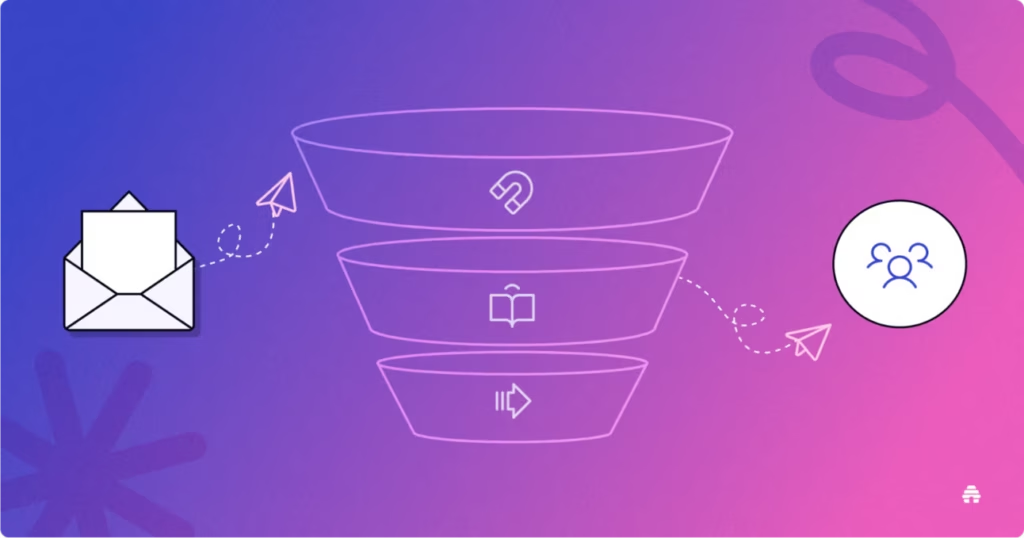
Some people don’t know what they want. That’s because they are ignorant about their needs, desires, and fears. Many people start their journey at this point, and here, you have to make it your mission to educate these prospects.
If noise causes a lot of stress, but the prospect isn’t aware of this issue, it is your mission to make them aware of this fact. For this, a blog post on how exposure to too much noise can have bad side effects on your mental health may get your prospect interested in finding out more about it.
If your prospect did not even consider that too much noise can be the cause of their stress levels, now, they are beginning to take it into consideration.
With such content, you make the prospect aware of the issue that they are having. That’s why this stage is named the Awareness Phase. Here, you don’t necessarily try to make a sale, but only make the prospect aware of a certain problem. In other words, in this phase, you should educate rather than sell.
Stage 1: What Are the Options?
After you have made the prospect aware of the problem, your next mission is to make them consider your product as the solution to that problem. This phase is named the consideration phase, and it’s when the prospect starts looking for concrete solutions.
What your content marketing strategy must do here is to persuade them that your product is the one that will solve their problem. How do you achieve that?

By delivering the right content for this level. Your content marketing strategy can make good use here of case studies, client stories, and testimonials of clients who are satisfied with your product. Nothing beats concrete examples of people who have solved the problem that you have solved.
A page dedicated to the most frequently asked questions (a FAQ page) can make the prospect earn your trust. When you put enough information on the table for the prospect to make an informed decision. They are more likely to consider your product and not the product of the competition.
Comparison pieces are also a great content format that you can use in this phase of your buyer’s journey. At this phase, the prospect keeps making comparisons between the possible solutions they may choose. You can help them make a decision faster by comparing your product to other similar ones on the market.
One important thing to note about the consideration phase is that one of its goals is to reduce the perceived risk. People often do not want to risk when making a purchase. It is your duty, through your content marketing efforts, to show the prospect that by making a purchase, they aren’t risking anything in terms of time, money, or safety.
Stage 2. The Decision Phrase
In this third phase, your prospect has narrowed their options and is ready to decide. If you made it here, consider yourself privileged. Out of all the options, they chose your product and are considering making a purchase from you.
However, it is important to highlight that this is the stage where many get content marketing wrong. The prospect already knows the problem and possible solutions. They are now comparing providers.
What can you do in this phase? Through your content marketing strategy, you must distinguish your product from the competition’s. Here, having a clear USP can help your business. Also, having clear incentives to make the prospect purchase from you is a must. But how do you show this through your content marketing?
As in the previous stage, you can make use of testimonials and case studies to prove to your prospect the superiority of your product. Besides that, detailed services pages and product demonstrations are pieces of content that, depending on the value of the product, can interest the prospect.
However, even simple blog posts, written with the intention of making your product stand out, can help you transform a prospect into a client at this stage.
Do They Trust You Enough?

You’ve taken the prospect through the buyer’s journey up to the decision phase. However, for some reason, they do not want to purchase. They understand what you are selling, and out of all the options available, they consider that your product is the best option for them. Yet, they do not purchase. Have your content marketing efforts failed?
Not quite, but it did not manage to do one important thing: earn their trust.
Yes, in sales, earning the prospect’s trust is vital if you wish to transform them into a client. If they do not trust you at this phase, then your content marketing efforts haven’t done something properly.
Now, you can offer your prospect a couple of things that might enhance credibility:
> expertise
> specificity
> evidence
> transparency
> consistency
> original insights
> demonstrated results
At this stage, it will be a great place to distinguish between self-promotion and authority.
Saying “We’re industry leaders” isn’t particularly persuasive. However, showing exactly how you think, what you know, and what you’ve accomplished is.
Give Them a Reason to Act
One interesting fact about human psychology is that we are lazy creatures. If we can delay something, we can do it for weeks, months, or even years to come. That’s why one thing your content marketing strategy needs to make at this point is to give them a reason to act now.
At this stage, copywriting becomes incredibly important. Not only that, but only through copywriting efforts may you get the prospect to take the desired action. (Mostly, you want them to make a purchase.)
Content marketing works the following way: awareness → understanding → trust → desire
On the other hand, copywriting helps turn that into action.
A clear offer can become a powerful tool that you can use to convince your prospect to make a purchase. Non-negotiable is, of course, the call-to-action (CTA). Prospects who aren’t 100% decided to make a purchase need to be pushed gently from behind to do it.
At this stage, your content marketing strategy must offer risk reversal and a guarantee for the prospect. Studies have shown many times that once you clear all objections and offer the prospect a form of warranty, they are more likely to purchase your product.
Remember that the Journey Isn’t Linear
Content marketing can help you transform any prospect into a paying customer. Just remember that the process isn’t linear, with you having to try constantly to get the prospect on your side.
They may:
> discover your company on LinkedIn
> read three blog posts
> leave
> see a Google result six weeks later
> read a case study
> subscribe to your newsletter
> compare you with a competitor
> return to your website
> finally contact you
That’s why businesses need a content ecosystem, not isolated pieces of content. In other words, they need a content marketing strategy. They will never follow a linear process of going from figuring out their problem to buying your solution, but you certainly can make their life easier through content marketing.
What makes your prospect purchase your product? A clear conviction that it will solve their problem and a high trust in what you can offer them.

Thumos Writing is an online writing agency that offers content marketing services to small- and medium-sized businesses. If you are looking to leverage your content marketing and increase your conversion, contact us as soon as possible.
In the meantime, we recommend you read some of our other articles on content marketing and on small business writing. That way, you can train yourself to understand content marketing better and to use it for your own business endeavors in the coming future.
Has this article taught you something useful about content marketing?